Google Research's Yossi Matias on the Kind of Thinker Who Will Thrive in the AI Era
Google Research VP Yossi Matias on AI labs for every scientist, ambient intelligence, soft skills and thinking like an organization of one. Our summary.
By Tech Team Strategy · Nov 4, 2026 · 6 min read
Watch the original interview: YouTube
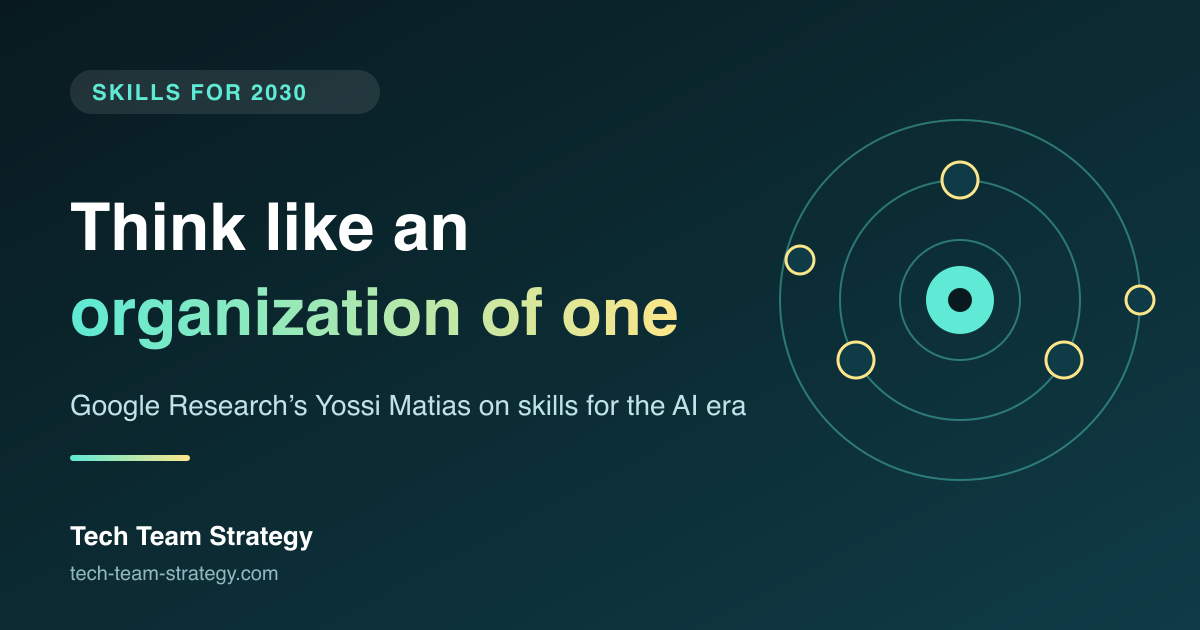
On her podcast I've Got Questions, futurist Sinead Bovell sits down with Yossi Matias, VP of Google Research, for a fireside chat at one of Google's offices in Palo Alto. They talk about what a scientist's job looks like by 2030, how everyday life changes when AI becomes "ambient," how Earth AI turns predictions into action, and which skills matter when the boundaries of what is possible keep expanding. The conversation runs about 21 minutes.
Disclosure: the video states that this episode was brought to you by Google Research.
This article is our own summary, with short quotes and timestamps from the video's transcript. Watch the full conversation above for everything that was said.
The short version
- Every researcher gets a virtual lab. An AI collaborator that is a polymath because it reads across disciplines, so scientists act more like advisers of labs (1:39 to 4:26).
- Crossing disciplines gets easier. Specialization will still matter, but AI can help people work across fields (4:26).
- Ambient intelligence. Once technology is good enough, "we just use it" and stop noticing it (5:32 to 8:02).
- From prediction to action. Flood forecasts already guide help; Earth AI aims to let you simply ask questions about impact and response (8:02 to 10:53).
- Soft skills are real skills. Asking the right question, listening, judgment and ethics (12:38).
- An organization of one. Bovell's phrase for the systems thinker who acts like a small company (15:19).
- What keeps him up at night. Making sure the right opportunities get chosen (18:06).
What he said, by topic
A future where every scientist has an AI lab (1:39 to 4:26)
Matias says scientists are curious explorers and inventors, and that the way they work keeps changing. If every researcher has "their own virtual lab," meaning an AI collaborator that reads across disciplines, then the researcher becomes more like today's senior scientist advising a lab of grad students and postdocs, focused on "asking the right questions." He warns the academic system is not set up for that pace and calls it a time of transformation that can feel intimidating but offers extraordinary opportunity.
Working beyond your specialty (4:26 to 5:32)
He notes science has pushed people toward deeper specialization, which makes cross-discipline work hard. He cites Hilbert, who took up physics late in his career, and Einstein collaborating with a mathematician. Systems that bring disciplines together can help everyone work more holistically, though knowing how to go deep "is going to be incredibly important."
Everyday life in 2030 and ambient intelligence (5:32 to 8:02)
Matias asks how life changed over the last ten years, and points to constant communication. His observation: once a technology is good enough, "we stop paying attention to that." He calls the best form of intelligence "ambient intelligence": it works so well that we just use it. He uses self-driving cars as an example he still finds magical.
Earth AI and bigger questions (8:02 to 10:53)
Bovell notes that questions like where to open a shop or whether to lease a building used to require consultants. Matias recalls seeing a village in India flooded overnight about ten years earlier, when predicting the next flood was out of reach. He says there are now good predictions, and that the government of Nigeria sent money to villagers ahead of a flood using Google's flood forecasting API. With Earth AI, he imagines asking which communities and infrastructure will be affected and how to mobilize, and applying the same idea to turning health signals into actionable advice. The objectives stay the same; "what is changing is the level" at which we can act.
When AI becomes something we take for granted (10:53 to 12:38)
He recalls people asking whether kids would get lazy if they could look everything up, and says they are smarter because facts are a given. He shares a story of his son noticing one line was off in a translated page, something that was science fiction a few years before. He expects people to be "as busy as we are today" because goals and targets rise.
Soft skills, new roles and hiring (12:38 to 15:19)
Bovell points out that data scientist did not exist as a role until 2008. Matias expects huge opportunity for builders, with the meaning of "builder" changing constantly. What Google looks for are people who can "ask the right questions," spot opportunities and use technology well, plus communication, listening, judgment and ethics. He wants the next generation to learn how to ask questions, do research, use technology, adapt and keep learning. He also expects much of today's friction in using AI tools to go away.
Thinking like an organization of one (15:19 to 18:06)
Bovell sums up the ideal hire as a systems thinker who has "miniature departments," thinks about ethics, asks good questions and keeps evolving like a company. Matias agrees, noting that vibe coding lets non-programmers do basic coding and that people can sketch product designs, so more people can play more roles. He mentions getting "a small seminar" of analysis on demand to speed decisions. Bovell's prediction: a new role for the person you call to fix the AI embedded in your house.
What keeps him up at night (18:06 to 21:11)
The opportunity is so broad that his main worry is meeting the moment and picking the right problems, in areas such as healthcare, crisis resilience, education and energy. His team balances impact now with looking over the horizon at things "nobody was thinking about yet." Bovell closes by joking that everyone will be up late working with their agents.
Chapter guide
- 00:00 Intro
- 01:39 A future where every scientist has an AI lab
- 04:26 What happens when experts can work beyond their specialty?
- 05:32 Everyday life in 2030
- 08:02 Earth AI: Asking bigger questions about our planet
- 10:53 When AI becomes something we take for granted
- 12:38 Soft skills, new roles, and the future of hiring
- 15:19 Thinking like an organization of one
- 17:25 Sinéad's prediction for a new job in the AI era
- 18:06 What keeps the Head of Google Research up at night?
- 21:11 Closing thoughts
What it means for your business
- Hire for questions, not just answers. Look for people who can spot the right problem and explain why it matters.
- Value the "soft" skills. Communication, listening, judgment and ethics decide how well AI gets used.
- Let people cross roles. AI lets a designer prototype, an analyst code and a manager do research. Make room for that.
- Plan for ambient AI. The best AI is the one customers stop noticing. Design for "it just works."
- Choose problems on purpose. When almost anything is possible, selection is the scarce skill.
Video details
- Title: The Kind of Thinker Who Will Thrive in the AI Era | Head of Google Research (Yossi Matias)
- Host: Sinead Bovell, I've Got Questions
- Guest: Yossi Matias, VP of Google Research
- Published by: Sinead Bovell on YouTube, October 22, 2026
- Length: about 22 minutes
- Watch: youtube.com/watch?v=FlOufV3hZFo
- Note: quotes come from the video's automatic transcript and are lightly cleaned. Check the video for exact wording.
Want to put this to work?
We help owners turn AI trends into a plan, a product and a launch. Book a free call or see our services.
Originally published by Tech Team Strategy
Get the briefing
The week's essential stories, free in your inbox.
More Big Tech
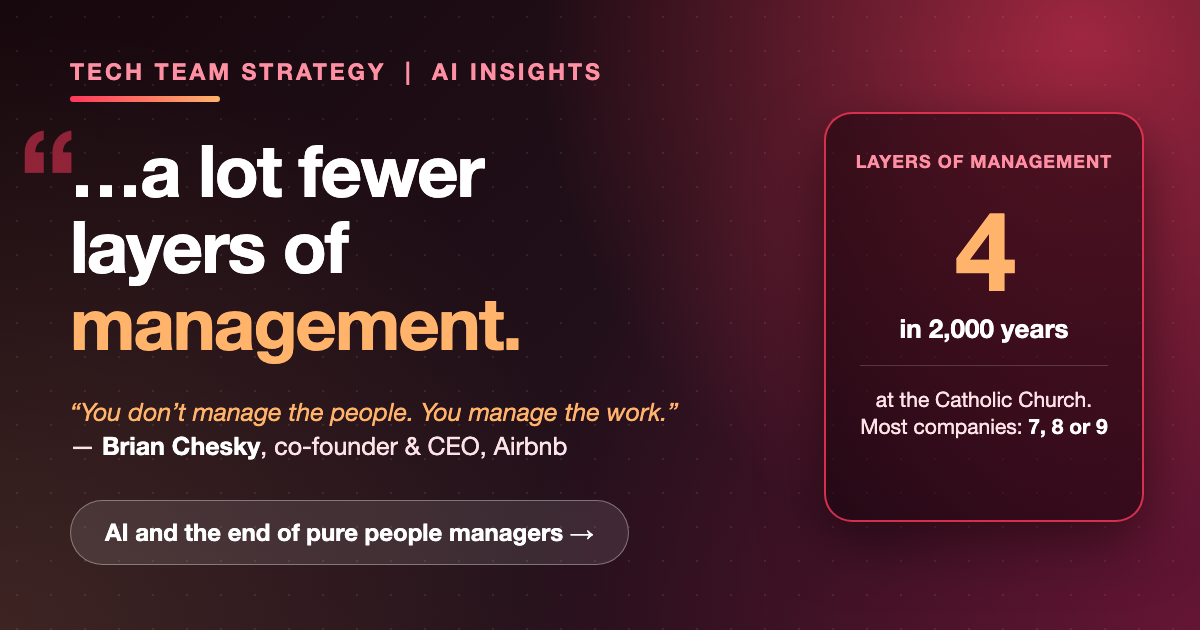
"You Manage the Work": Brian Chesky on AI, Fewer Management Layers and the End of Pure People Managers
Airbnb CEO Brian Chesky on why AI means fewer management layers, why pure people managers won't last, managing through the work, and tiny teams on small problems.
Oct 30, 2026 · 11 min
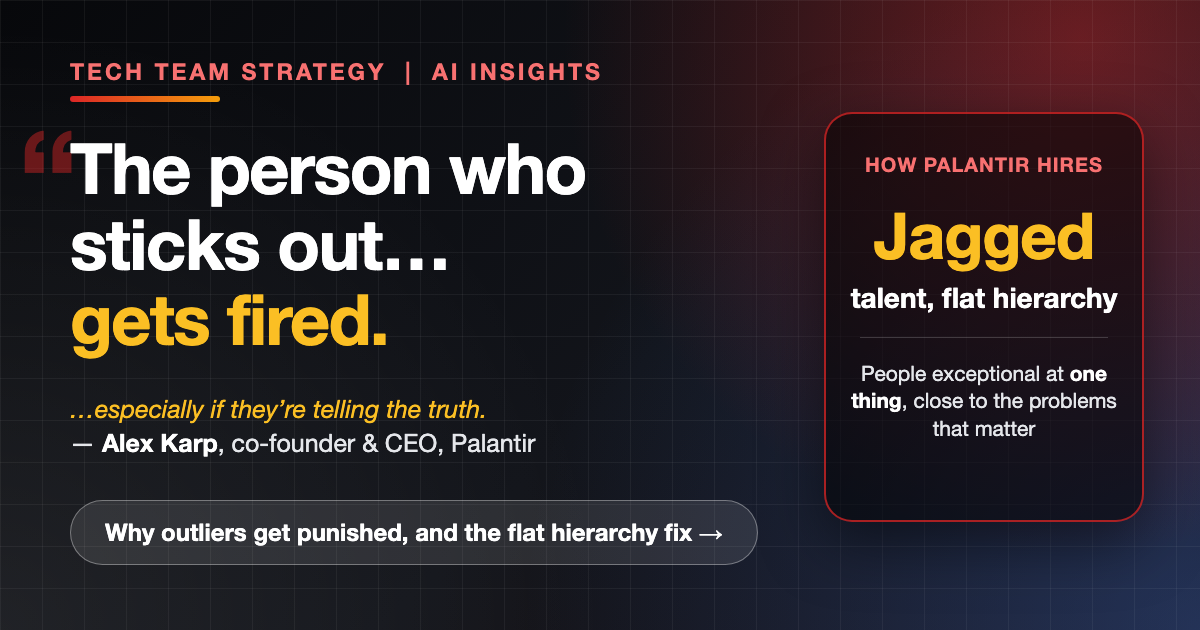
Palantir's Alex Karp: "The People Who Won the Tech Battles Won the World" on Artist Colonies, the True Cost of AI and China
Palantir CEO Alex Karp on jagged talent, AI cost as what you paid plus what you lost, sovereign AI, security, AI wealth politics and the race with China.
Oct 30, 2026 · 11 min
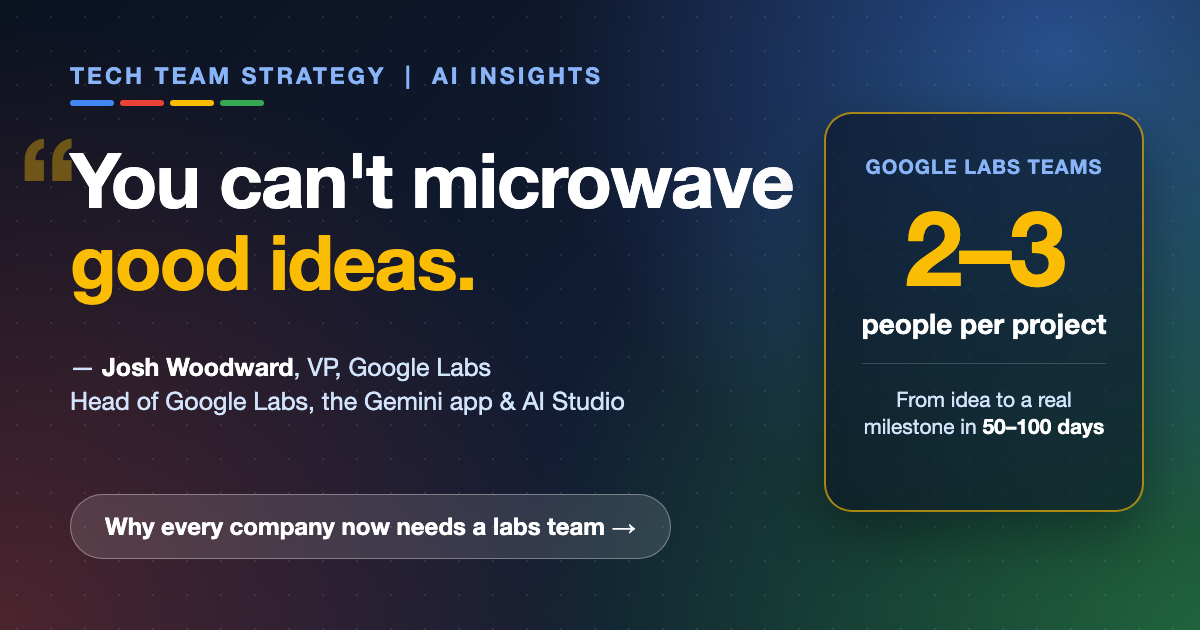
Why Every Company Now Needs a Labs Team: Google Labs' Josh Woodward on Finding Ideas, Killing Projects and Building Fast
Google Labs head Josh Woodward on finding ideas, the almost possible list, spotting product-market fit, killing projects and setting up a lab that lasts.
Oct 29, 2026 · 9 min